There was nothing particularly wrong with the attic.
That was probably the problem.
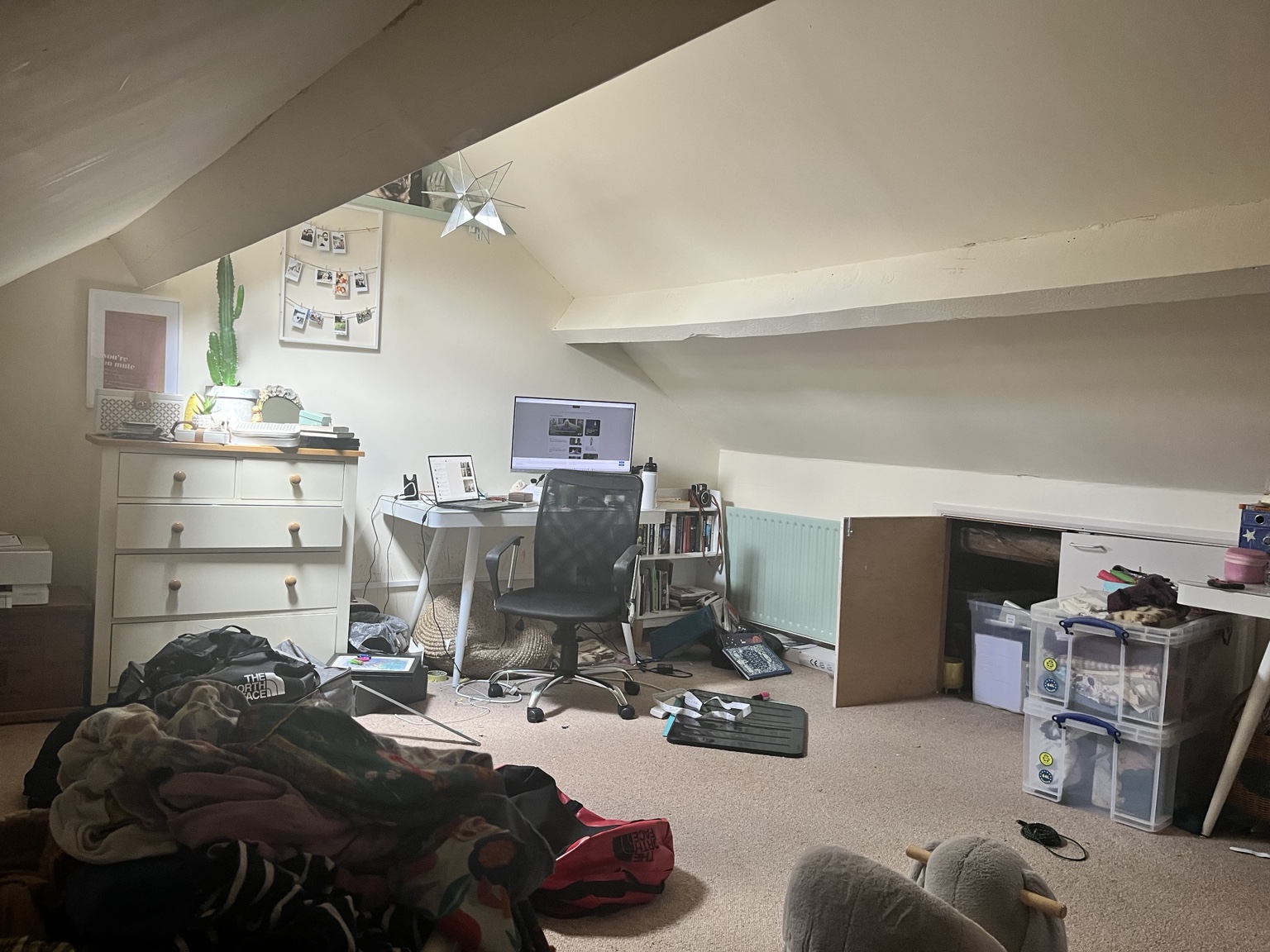
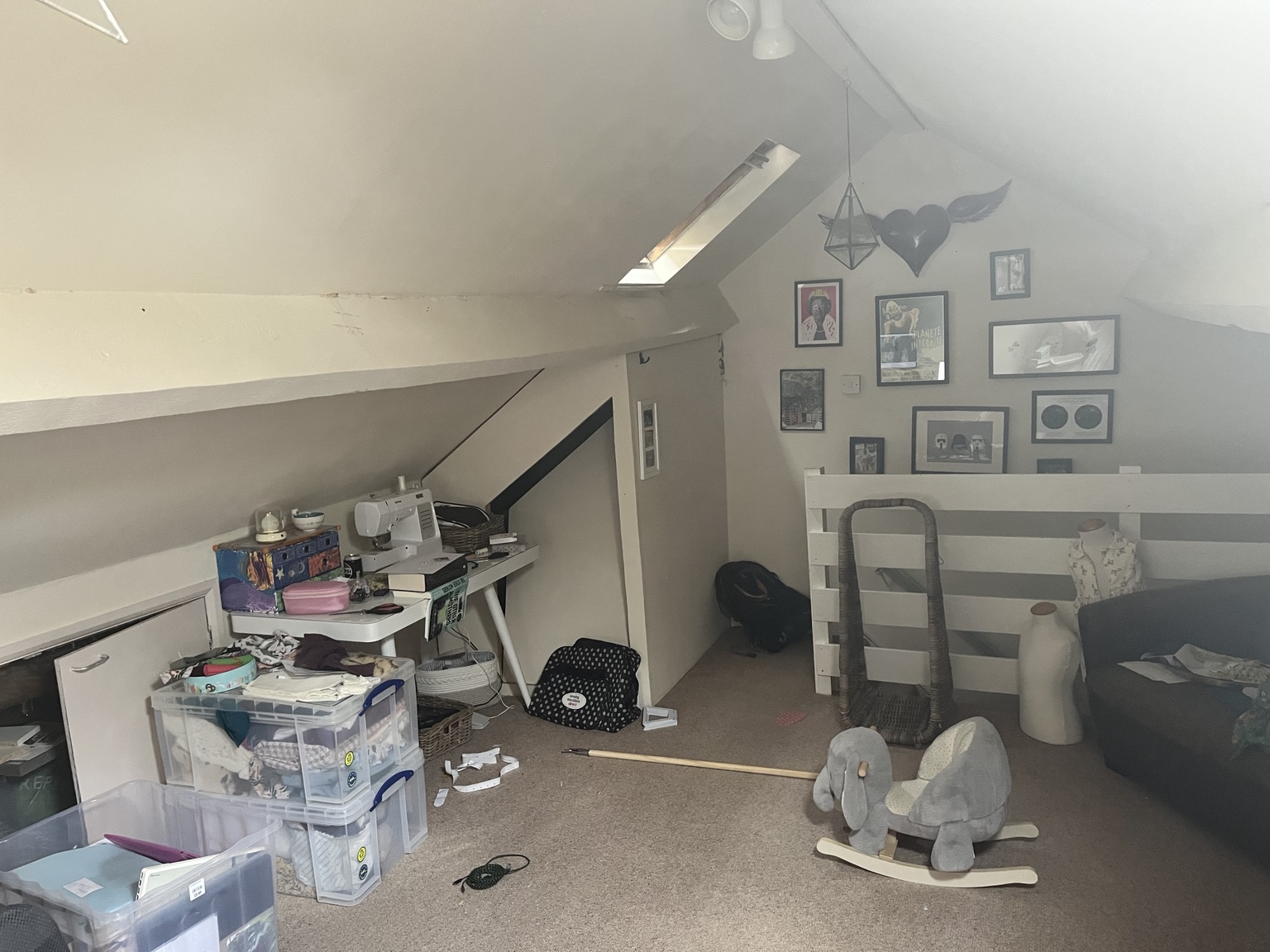
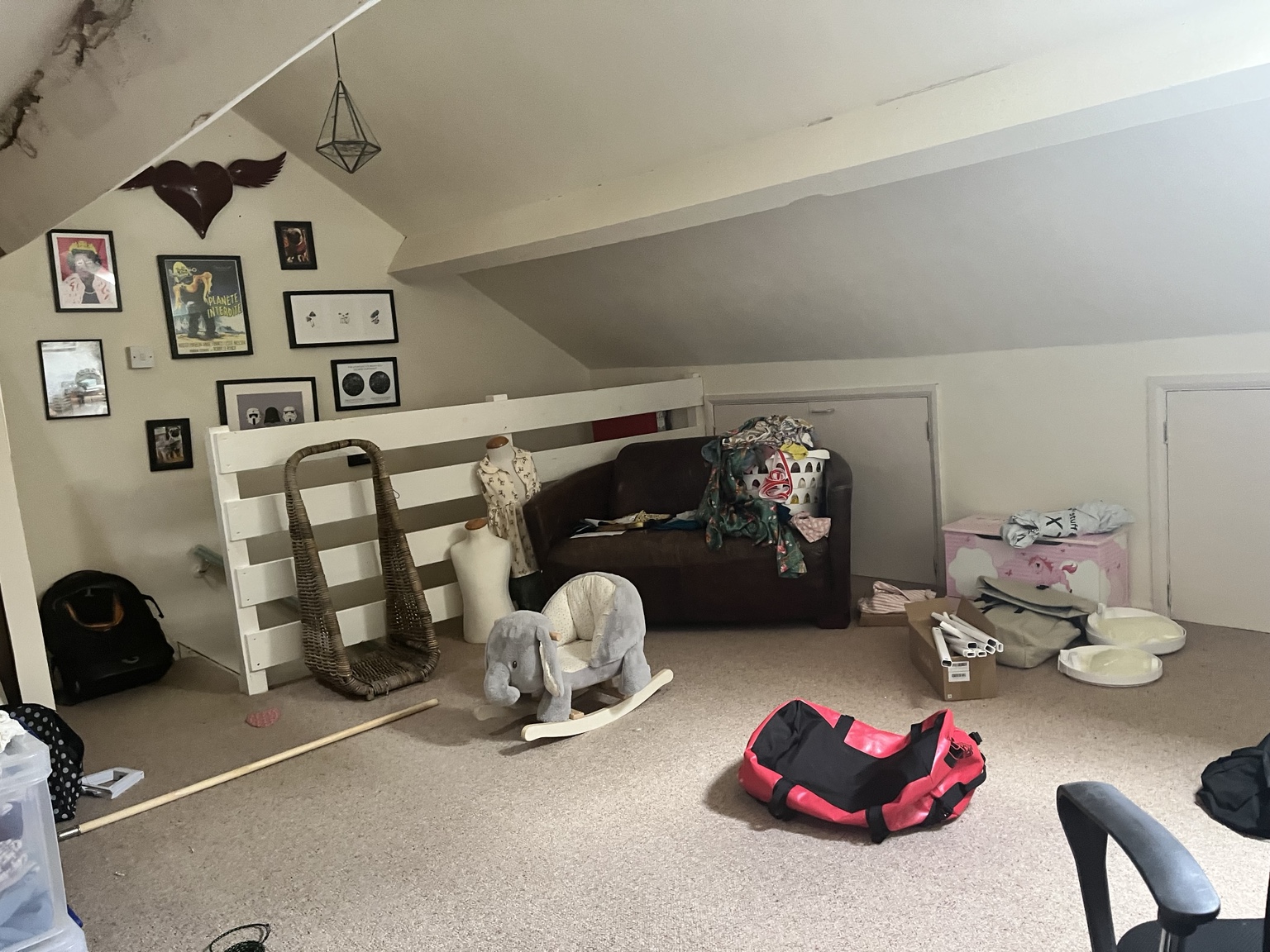
When we moved in, it was magnolia. Aggressively magnolia. Walls, slopes, beams, little doors beneath the eaves — every strange angle of the roof had been painted the same non-colour.
It was a useful room. Eventually it became my office, sewing room, dumping ground and the place where things went when they didn’t really have anywhere else to go. There was a desk at one end, a sewing machine at the other, boxes of fabric, children’s things we’d grown out of, laundry waiting to be sorted and furniture that had simply ended up there.
I had put pictures on the walls and filled it with things I liked, but somehow the room itself still had absolutely nothing to say.
And I spend a lot of time in this room.
Which admittedly sounds slightly ominous.
But I wanted one room in the house where I didn’t have to ask whether something was sensible, neutral, timeless or likely to appeal to a hypothetical future buyer. I wanted to put together all the things I am inexplicably drawn towards: old houses and Victorian oddities, stars and moons, dark wood, fortune telling, celestial imagery, gothic things, antiques, books and a lingering affection for the slightly witchy aesthetic of being a teenager in the 1990s.
There was no particular interior-design style I was trying to recreate.
I just wanted it to feel like me.
Before
The magnolia years
The magnolia problem
The first thing that had to go was the magnolia.
What surprised me was what happened to the shape of the room when I painted it dark.
Conventional wisdom might suggest that an attic — already compromised by low ceilings and sloping walls — ought to be painted pale to make it feel larger. But pale paint wasn’t disguising the peculiar architecture. It was just making every beam, slope and junction stand out as an awkward interruption.
Once parts of the room went a deep blue-black, those same features started to feel intentional.
The eaves became cosy. The roofline became dramatic. The beams stopped apologising for being there.
It began to feel like an attic.
And I realised that was exactly what I wanted.
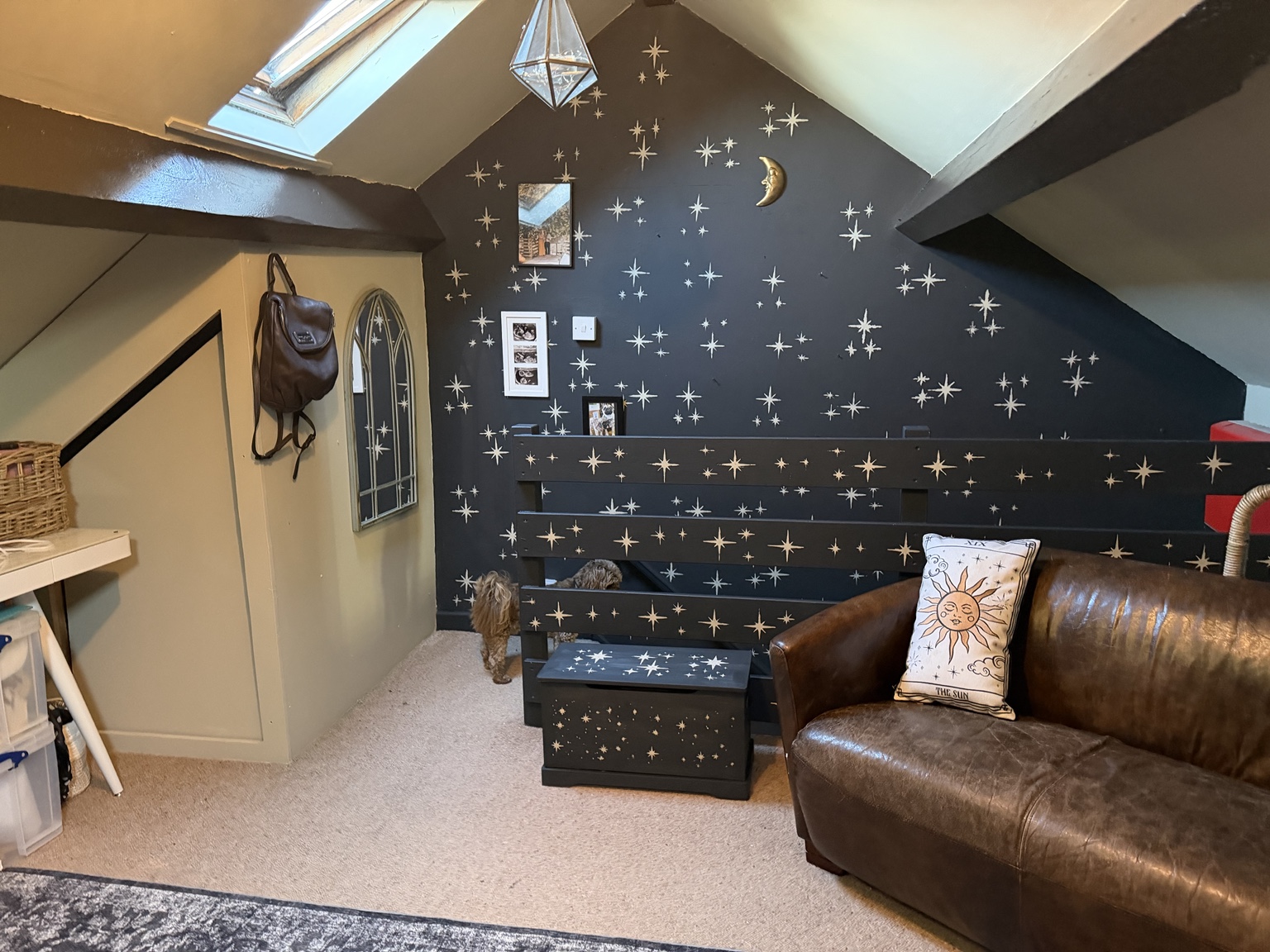
Then I started painting stars
The stars were not originally supposed to become quite such an undertaking.
I wanted the staircase to establish the feeling of the room before you actually reached it: dark walls scattered with old-fashioned celestial stars, as though you were leaving the ordinary house somewhere below.
So I began stencilling.
A few stars became constellations. Constellations spread across the wall. Then onto the timber. Then further down the staircase.
There is no astronomical accuracy whatsoever involved.
Some are silver, others have a warmer, aged metallic tone. They’re different sizes and imperfectly spaced. Amongst them sits a little brass crescent moon with a face, looking serenely over the whole thing.
They are obviously handmade.
I think that’s why I love them.
Perfect vinyl stars would probably have been quicker. Wallpaper certainly would have been. But the slight irregularity makes them feel less like a celestial-themed interior and more like something somebody might once have decided, for reasons of their own, to paint all over the walls of an attic.
That’s a distinction that apparently matters enormously to me.
Things with stories
Once the background changed, I became much more interested in what I brought back into the room.
Some things were already mine. Some were repurposed. Some were found because I simply couldn’t resist them.
An old wooden chest became a printer stand. A brown leather sofa that could have disappeared against magnolia suddenly looked wonderfully warm against the dark walls. There are books, plants, little mirrors, candles and odd decorative objects. Celestial things have inevitably multiplied.
Not everything is antique, despite my best efforts to make it look as though it might be.
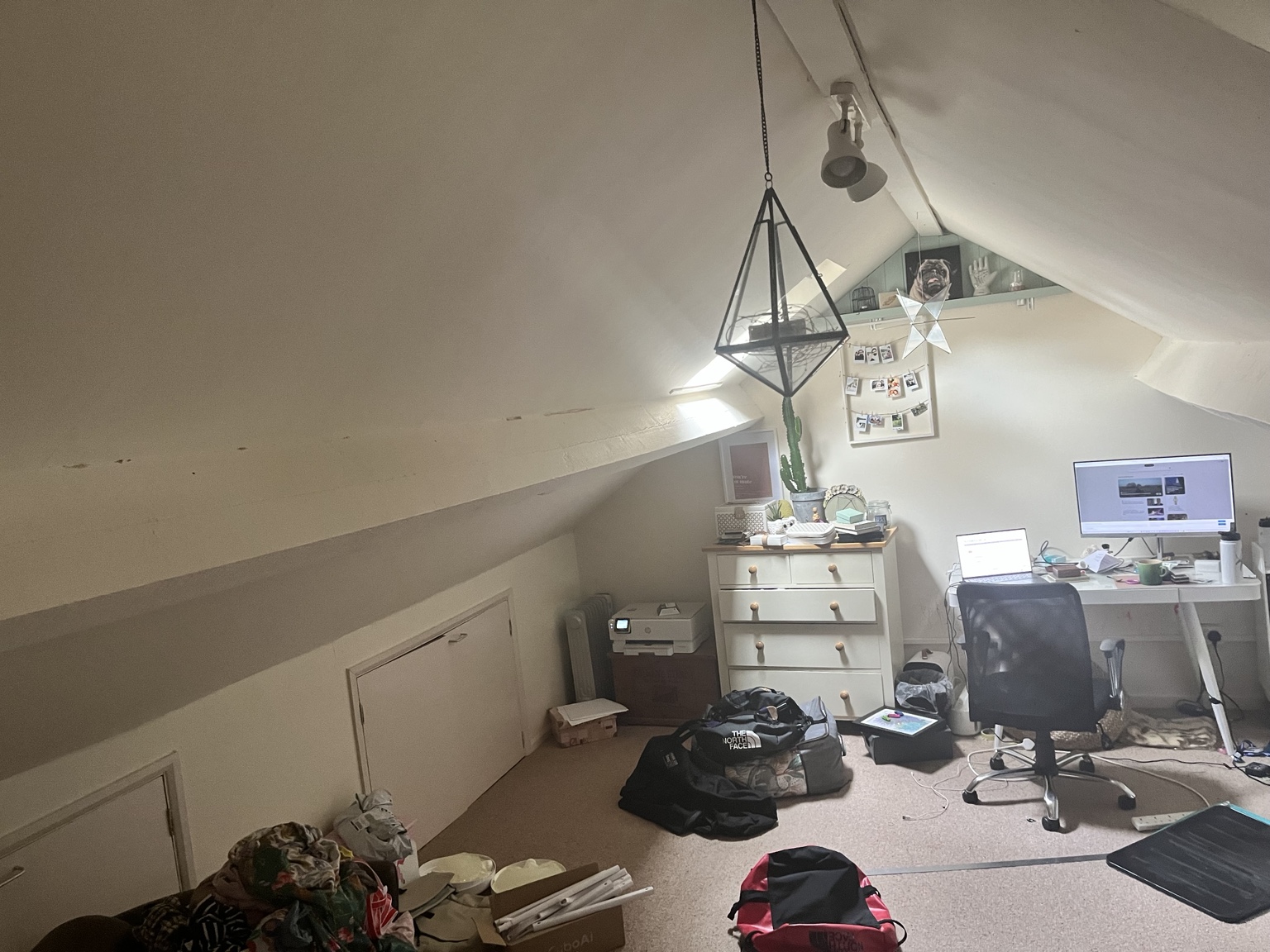
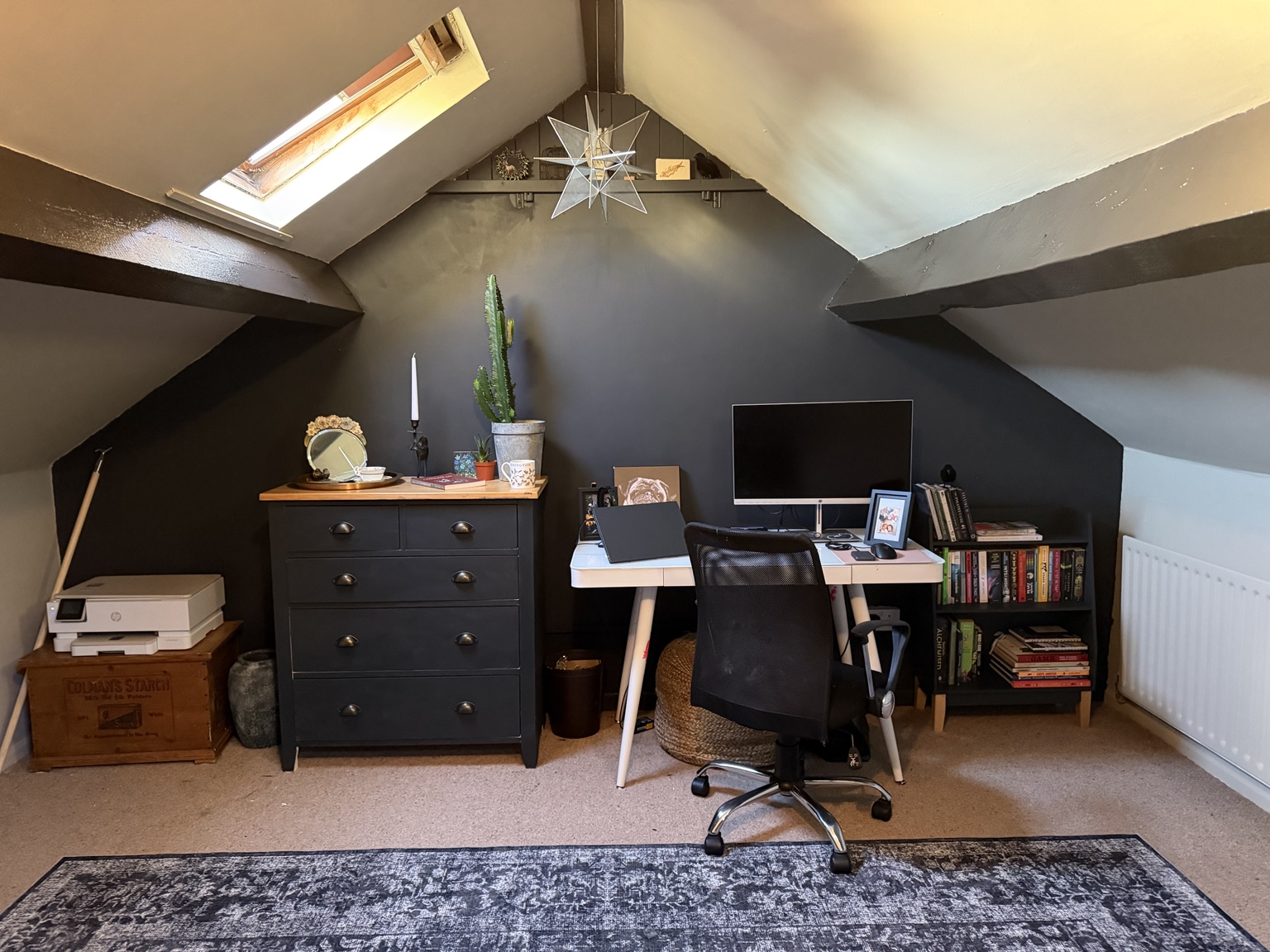
The same working end of the room, before and after.
And the room still has to work.
I work here. I sew here. The printer still needs somewhere to live. Fabric needs storing. There are cables and monitors and office chairs and all the deeply unromantic paraphernalia of working from home.
I didn’t want to create a photograph of an imaginary Victorian attic.
I wanted my actual life to happen inside a room that delighted me.
Perhaps that’s the difference between decorating and making a place your own.
A room beneath the roof
There is something inherently appealing to me about an attic.
Attics are where houses keep their secrets.
They hold trunks of clothes, forgotten photographs, Christmas decorations, furniture nobody quite knows what to do with and boxes belonging to people who haven’t lived there for years. In stories they’re even better: the locked room, the discovered diary, the mysterious portrait, the thing under the dust sheet that absolutely should not be uncovered.
They sit slightly outside the respectable domestic life happening downstairs.
Perhaps that’s why this felt like the right room in which to be a little excessive.
Our house has to function for a family. There are children and dogs and toys and washing and all the negotiations involved in sharing space with other human beings.
But tucked beneath the roof is this one peculiar little room where I can paint stars on a wall simply because I want stars on a wall.
There is something surprisingly liberating about that.
It isn’t finished
The room isn’t finished.
I’m beginning to think I don’t actually want it to be.
There are still things I want to make. I want a witch mark on one of the old beams. My sewing area needs work. There are objects I’ve yet to find and blank spaces that will eventually acquire something strange.
Because the rooms I love most never look as though somebody bought everything for them in one afternoon.
They accumulate.
A picture here. An inherited object there. Something discovered in an antiques shop for no defensible reason. Something handmade because the precise thing you imagined didn’t exist.
Eventually the room becomes a record of its occupant.
And that’s what has happened here.
The bones of the attic haven’t changed. The low ceilings are still low. The beams are still inconvenient. The carpet is still beige. There is still a printer and an office chair and considerably more fabric than any reasonable person requires.
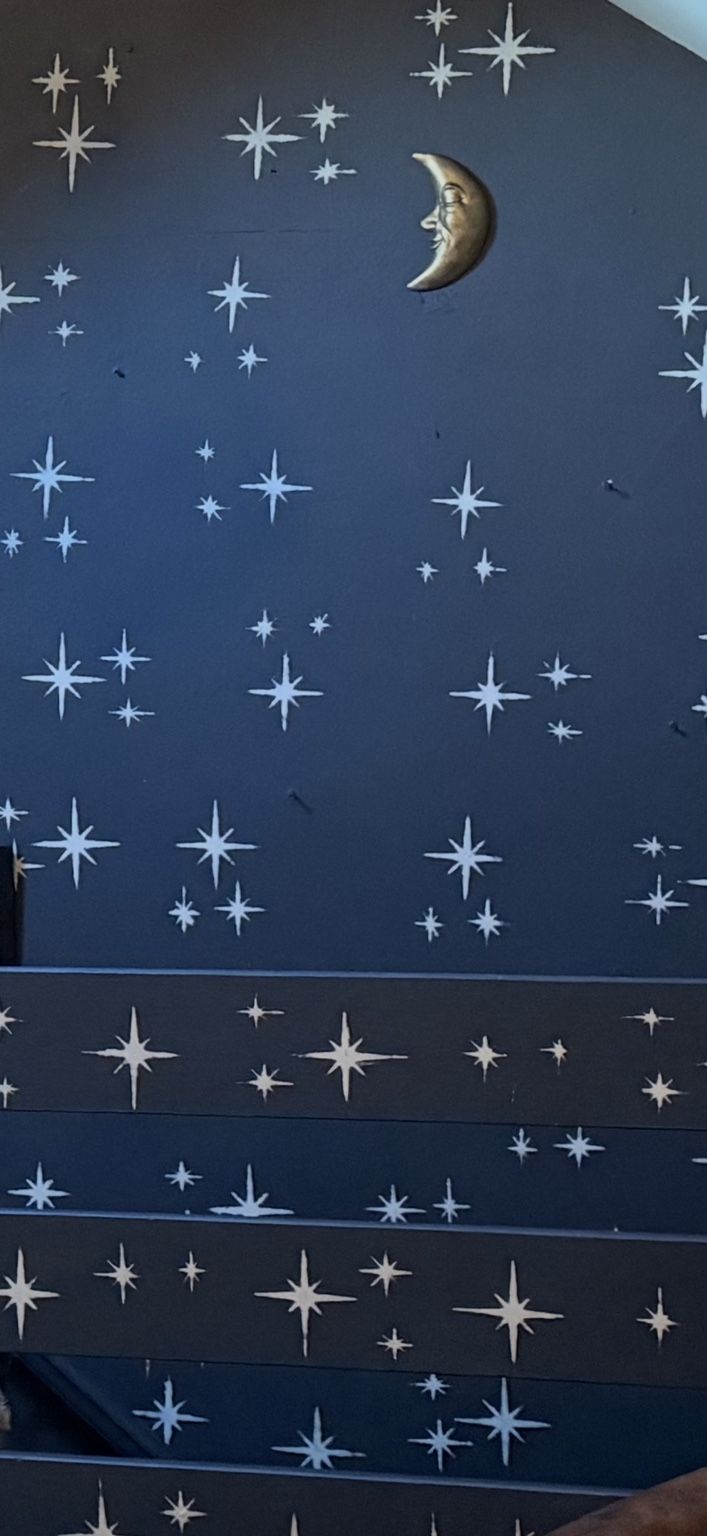
But now, when I come upstairs, the ordinary house begins to disappear behind me.
The walls darken.
Stars appear beside the staircase.
There is a moon watching from the wall.
And by the time I reach the top, it feels a little less like entering my home office and a little more like climbing into my own head.
Which is exactly what I wanted.
And possibly fair warning to everyone else.